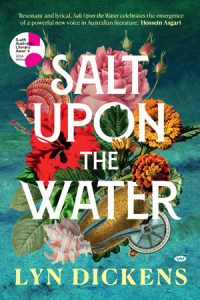
Reviewed by Patricia Simms-Reeve
Devotees of the great nineteenth century romantic novels will readily engage with the saga of Colonel William Light and Clarissa FitzRoy. Their paths are unconventional, colourful, and beset by forces outside their control.
Clarissa with her long auburn locks and gowns of flaming red and deep-sea green is an eye-catching woman in many settings and in the restrained society of England is more so because her origins are Asian. She has the golden complexion and distinctive brown eyes that present a difficulty in her being welcomed into the milieu that shuns anyone who is not obviously a member of the exclusive upper classes. Her beauty comes from the steamy exotic realm of Siam whereas William’s roots are in the riotous greenery of Penang.
He is a surveyor, historically known as a key figure in the early settlement of South Australia. He is a man of vision with idealistic plans to make this area of the great South Land a fine example of a better, fairer society, than ones he’d experienced. He was wounded in the Napoleonic wars, had worked in India and had brushes with the tyranny of the notorious East India Company. Like Clarissa, he too does not have the fair features of the entitled English. Even in India he is regarded as a ‘half-cast’.
They have an unforgettable encounter in London’s Vauxhall Gardens in 1822. William is transfixed by the woman in a red gown in the basket of a hot air balloon. Others are uneasy but she is exhilarated by the adventure. He is captivated and she too forms a bond.
Their lives do not continue on a happy path. There are partings. At one stage marriage is considered, but instead is replaced by times snatched in Bath, Italy and finally they meet once more on the shores of South Australia, close to Kangaroo Island. Clarissa is with the crew of a sailing ship; he is focused on his work as a surveyor for the infant colony. It is now 1836.
Lyn Dickens portrays a romance between the two that is gripping in its intensity. They chart an uncertain journey that is sometimes quietly serene often in emotional turmoil. As she tells him, ‘You will die trying to be an Englishman’. Both characters cannot abandon their sense of rootlessness, doomed to always feel misplaced.
Chapters are headed by years which charts significant episodes in each of their lives and relationship – Clarissa’s related in the first person, William’s in the third as befits an historical account. It is a complex history for both but Dickens very clearly surmounts this hurdle.
She also writes with a poetic realism. At night, Clarissa notes ‘the creeping silver smile of the ocean, biting into the shore’.
Towards the end there is a tragic realisation by the surveyor. He learns there can be no Eden, that there is only survival in the ruins of what we have. The tolerance, fairness, respect and equality for which he aspired, are dreams.
Salt Upon the Water could be tears, for this is a deeply moving book with vibrant characters we quickly learn to care about and their plight is such a fraught one, with disappointment and compromise a poor consolation. It is made tremendously powerful by the beauty of the writing and the strangeness of the plot.
Above all it shines a light on the cruelty and destructive power of prejudice.
Salt Upon the Water
[2025]
by Lyn Dickens
Wakefield Press
ISBN: 978 192338 820 8
$34.99; 252pp