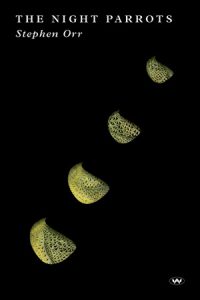
Reviewed by Rod McLary
This sprawling saga tells the story of Pastor Martin Gerlach, his wife Alma and their fourteen-year-old son Benjamin – or ‘Benno’ – who live on a Lutheran mission deep in the Australian outback. It is 1922, and the Pastor and his family have travelled from Leipzig to run the mission with the assistance of a teacher Ignatz Beck and a number of local Indigenous people. In so doing, Martina and Alma left behind their other children in the care of grandparents and chose Benno to accompany them as he was the most reliable and dependable child.
Narrated in the voice of Benno – at fourteen and later at eighty – it is as much a journey through his life and that of his own family as it is of his parents. While he describes the events occurring around him, he also shares his innermost thoughts and emotions with disarming honesty and insight – and he knew that [he] was living in some other kind of normal, and what went for other kids didn’t go for me [15].
Martin becomes ill and there are fears that, without medical treatment, he will die. So, a plan is devised whereby he will be transported to the closest train station which is at Oodnadatta and then onto proper medical care. But the mission is remote and far from roads and motorised transport so the journey has to be undertaken over a number of days using a dray and horses – and for a short time donkeys. From the beginning of the narrative, Benno lives with the fear that his father could die – And Father … only fifty years old, but dying [I knew, even then] from an old person’s disease [9]. Conscious of the responsibilities placed on his shoulders – and often reminded why he is with his parents in the outback and not his siblings – he is required to grow up more quickly than he should and carry a larger burden than his contemporaries.
But it is far more than a journey to a train station. The landscape with all its harshness, unreliability and often sheer beauty is very much an essential component of the narrative – and it reflects the author’s ability to set his novels deep within uniquely Australian settings. The care with which the author takes in the descriptions of the setting demonstrates an affection which cannot be manufactured. And as the family traverse the outback on their way to the station, there are frequent vivid descriptions of the country they are passing through: A grassy bank spreading around and growing into the watering hole. Granite boulders making a bay, of sorts, where a wallaby drank … And on the other side, carpet daisy halfway up a steep bank, a pair of bean trees [79]. Related to this is the respectful references to the Indigenous people and their culture and artifacts.
As the narrative progresses and moves to the present day when Benno is eighty-years-old and estranged from his son and daughter, Benno’s thoughts drift between now and then – as they do when thinking of one thing triggers a memory of the past which can its turn link back to a current event. Out of the blue, Benno’s estranged son Jack comes to his house and he finds out that he has a grandson twelve-year-old Tom. and his cloistered world opens up.
There is so much more to this novel than can be captured in a review. Stephen Orr has crafted a story which needs – or indeed demands – to be read slowly and savoured. Benno – and later his grandson Tom – are engaging characters and whatever shame Benno still feels from his earlier abandonment of his son Jack and daughter Sharon is dissipated by his embracing a second opportunity to restore the damaged relationships.
It is a novel of self-discovery and personal growth with all the backward steps and missteps which are part of life; and beautifully written.
Well recommended.
The Night Parrots
[2026]
by Stephen Orr
Wakefield Press
ISBN: 978 1 9233 8867 3
$34.95; 413pp