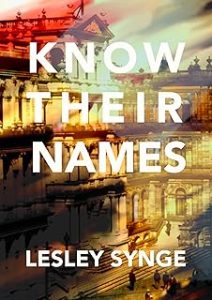
Reviewed by Ian Lipke
Despite the odd nature of the title, this is a serious piece of research. Lesley Synge identified an unresearched area of knowledge from our nation’s history and, employing accepted means of academic scholarship, has unfolded a new area of knowledge and published it for the benefit of mankind.
Her study is the establishment and administration of the Rewan Police Horse Breeding Station that, before it closed in 1934, processed thousands of good quality horses to meet an urgent need by mounted police. Part I of the study is an overview of Rewan Station, comprising its foundation in 1909, its consolidation during the First World War, the station during the 1920s, the crisis years and eventual closure in the mid-thirties. Part II comprises biographical information about station employees, and Part III is called Remediation and contains, inter alia, the conclusion and appendix.
When sifting through the raw material that provides her text, the author claims she found massive gaps in the archival record. A selection of these gaps was identified as of deliberate human origin. The author claims that information was withheld because it “inappropriately reveal[ed] culturally sensitive information or personal information (sic).” She went on to make a very interesting point, high on the discernment scale. This was the urgent need for all of us to feel. “Feeling-less-ness, emotional dryness and callousness were amongst the essential tools that the British Empire relied on to succeed in its many colonising projects” (14).
Synge makes a strong case for the Queensland Police’s negative attitudes to black people. She claims the Department’s records trail is, by turn, “colourless, unctuous, and insulting” (45). She is appalled at the racism and violence in Australia’s white-settler past. She takes particular exception to the use of ‘gin’ for black women and ‘boy’ for a black man. She calls the former dehumanising and the latter emasculating. I wonder if she would object to the Anglo-Saxon ‘fuck’, which means to till the soil? The word that describes a female aborigine is likewise ‘lubra’ but Synge has no comment on its usage. Much of this book demands admiration. It may not be immediately obvious that the book gains by being read aloud. Amongst a large number of striking passages appears the description of the camping ground as evening falls. It is an interpretation penned by an eyewitness. Second feel your gut rise in protest when the author protests:
Let’s not hurry. Feel those winds from Carnarvon Gorge (Kooramindanjie) worry the ‘great Australian silence’. Feel them fidget with the neglect that blankets black/white relations in Queensland…let their stories rise above the swishing of the Central Highlands grasses and the obscuring smoke of latter-day barbeques…”.
Many such passages appear through the text. Other forms of magic that readers might look for are the superb usage of alliteration (fished and foraged), the rightness of vocabulary usage (neighing and stamping hooves and the plop of manure), and, to terminate what could be a long list, the meaning of aboriginal words like Woorabinda (kangaroo sit down).
I’ve read that some authorities claim only the Bible is perfect – this book certainly isn’t. Focusing on Part I alone, I note that sentences can be found that are too long for ready comprehension, there are collections of words intended to be sentences but are not, Para I references ‘low murky-brown sandstone buildings’ which play a central place in country Queensland. I found that link a little undeveloped.
I’ve concentrated on Part I inadequacies. The reason for doing so is bizarre. Errors in presentation occur with ‘gay abandon’ early in the book but are difficult to find in later sections. However, common to all areas is the print that the author has chosen to deliver her text. It is too compressed, making concentration after a brief period difficult to maintain.
One must ask, did ‘sure spring’ really inspire ‘Springsure’?
Part II of this study is a number of biographies of aboriginal workers. Synge is to be applauded for attempting this task. Little distinguishes one worker from another, however. Top marks for effort, more top marks for recognizing the need, but less enthusiasm for the final result.
This is a greatly needed book. Synge has met a space in the market with a courageous effort that will stand as a model for later scholars to emulate. Errors exist but a fine attempt nevertheless.
Know their Names
(2024)
by Lesley Synge
Zing Stories
ISBN: 978-0-6480435-2-2
276 pp